
Seismic Sleight of Hand
How the “Debunked” Alaska Story Quietly Moves the Goalposts
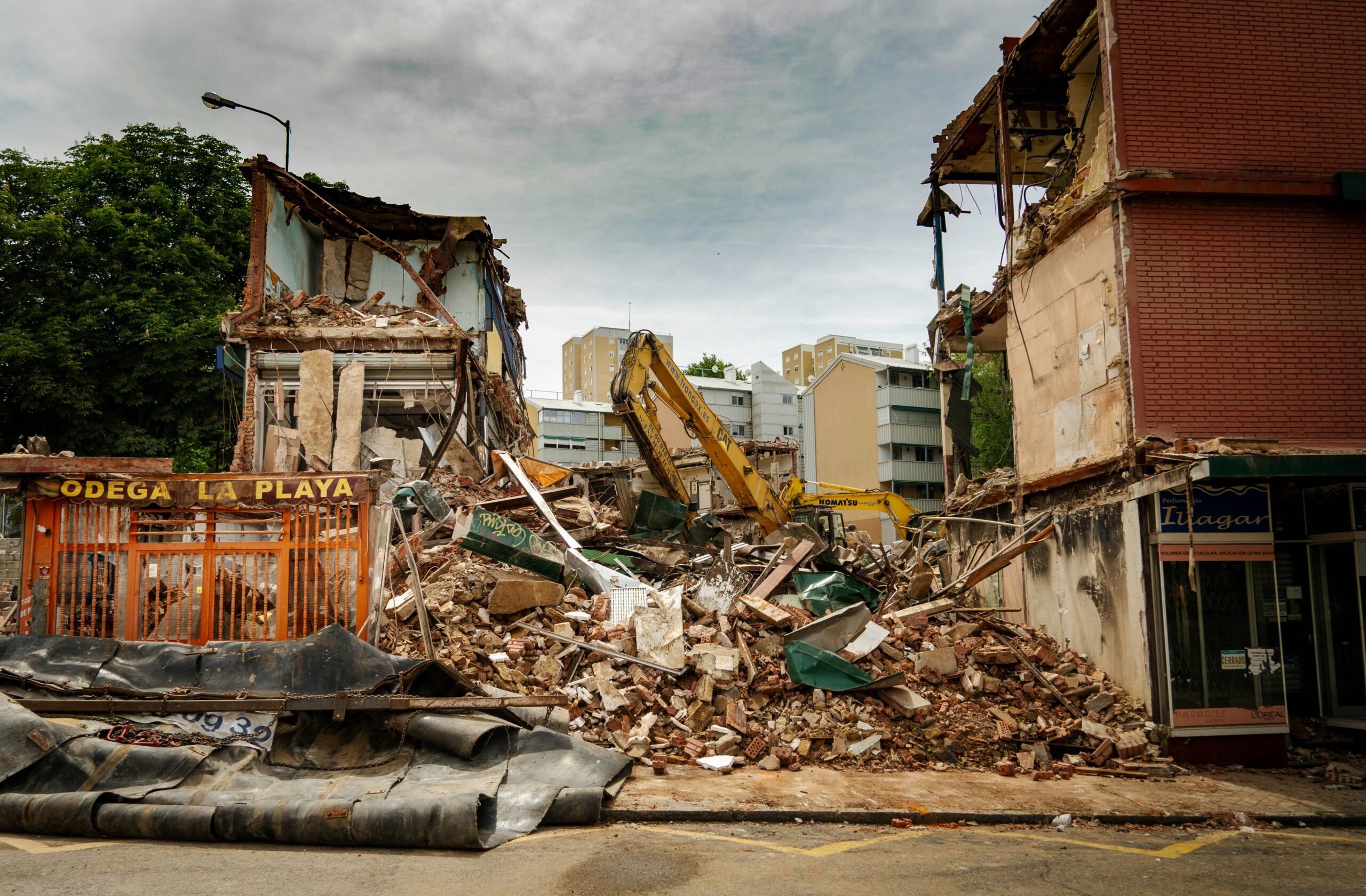
An earthquake hits western Colombia. Magnitude 7.4. Buildings crack. People feel it. Real enough.
Within hours the script is already running.
“Standard tectonic event.”
“Nothing unusual for this region.”
“And no, that high-frequency research facility up in Alaska did not cause it.”
Fact-checkers appear. Experts are quoted. The tone is calm, slightly amused, almost parental. The theory has been “debunked for years.” Time to move on.
On the surface it looks like good journalism. Underneath, the timing feels rehearsed.
Notice what actually happens. In order to kill the idea, they first have to bring it on stage, describe it clearly, and then execute it in public. You’re not simply told the claim is wrong. You’re being shown that this entire neighborhood of questions is off-limits.
That’s the part that stays with me.
The script never seems to grow. It arrives fully written. Quake happens. “Misinformation” is named. Confident debunking follows, wrapped in the authority of science. The sequence is almost always the same. Media researchers have watched this dance for years: outlets cover the conspiracy claim in order to reject it, and in the process they both amplify the claim and tightly control the frame around it.[1][4] The story doesn’t emerge. It is delivered.
Look at how the debunk pieces are built. First they restate the claim more cleanly and boldly than most believers ever did: Did Alaska’s facility trigger a 7.4 quake thousands of miles away? Then they give it just enough theatrical absurdity — “wild internet theories,” “bizarre claims” — so the reader can feel the eye-roll. Finally the experts close the door. Scientists say no. Seismologists confirm. Already settled.
Research into how these stories work shows the pattern is not accidental. Even when the content opposes the conspiracy claim, the presentation still sorts the audience into the rational and the irrational.[2][3] It is not only about what you are allowed to believe. It is about whether you are allowed to look in that direction without social cost. They are not simply censoring the narrative. They are contaminating the ground around it.
The earthquake itself is real. Colombia sits where the Nazca Plate dives under the South American Plate. A 7.4 is well within the expected range. The waveforms, the depth, the location — all of it lines up with the known fault system. That layer is not in dispute.
But “standard tectonic event” is doing double duty. It is offered as description and as verdict at the same time. It quietly carries the implication that no further questions are needed, and that it is somehow ridiculous to wonder whether any human-made systems might interact — even subtly — with already stressed geological structures. Those are two different claims welded together so tightly you are not supposed to notice the seam.
Of course plate tectonics can explain the quake. But does that automatically close every other line of inquiry? Are there technologies, research programs, dual-use systems capable of coupling energy into the ionosphere or atmosphere in ways that are probabilistic, deniable, or simply not publicly documented? You’re never invited to form that question. You’re told upfront that the whole subject is stupid.
Why this particular theory gets the ceremonial treatment is worth sitting with. Out of all the outlandish things people say online every day, why does Alaska, high-frequency transmitters, and earthquakes get pulled into the mainstream and shot in public? Why not simply ignore it?
In the background sit large radio arrays that can inject energy into the upper atmosphere, research that overlaps with military communications and more exotic capabilities, and a long history of dual-use science where pure research and operational testing blur. This is a sensitive neighborhood. You do not have to believe in an earthquake button to see why someone managing public perception might want the entire area mentally fenced off.
So the move is elegant. Take the most extreme, specific, and easily disproven version of the idea. Attach every surrounding curiosity about ionospheric research and geophysical side-effects to that one narrow claim. Disprove the narrow claim with a flourish. Let the fallout settle over everything nearby. The topic is not merely addressed. It is quarantined. Media research backs up the larger pattern: conspiracy narratives have moved into mainstream coverage, where they are used to define the boundaries of acceptable thought and identity.[11][3]
Fact-checking is supposed to mean: here is the claim, here is the evidence, let’s look carefully. Too often it has become: here is the claim, here is who believes it, here is why you don’t want to be like them. The tone does the work — “bizarre theory resurfaces,” “social media users falsely claim,” “experts say there is no evidence.” Studies on misinformation and conspiracy belief point to this exact dynamic: when coverage leans more toward shaming than explaining, it deepens the distrust it claims to fight.[18] What is usually missing is any transparent numerical picture of what the facility actually does, hard limits on power and altitude and coupling, or honest acknowledgment of what remains classified or simply unknown.
Authority replaces analysis. Reassurance replaces uncertainty. Identity politics — rational people versus conspiracy theorists — replaces genuine engagement. The message is not only “this isn’t true.” It is “keep poking at this and we will put you in the crank box.” That is not neutral correction. That is social control.
Research does show that strong mainstream counter-messaging can reduce belief in the specific claim being attacked.[2] But a second effect rides along for free. The same coverage trains the audience to avoid the entire surrounding territory. Whole domains of research and geopolitics become guilt-by-association ground. Academic work on media and conspiracy culture spells it out: these narratives become tools to draw a line between “good citizens” and “irrational others,” and that line is then used to restrict what it is socially safe to question.[3][19] You may not convince everyone that the official story is complete. You don’t have to. You only have to make the social cost of public curiosity high enough that most people quietly step back.
So the small question is easy. Did a facility in Alaska, by itself, deliberately trigger this particular 7.4 earthquake in Colombia? Publicly available data does not support that claim. Geology and energy math put the burden of proof very high, and it has not been met.
But that is the small question. The larger one — the one that seems to get memory-holed — is different. Are there technologies or research programs capable of interacting with large natural processes in ways that are subtle, probabilistic, or simply not on the public record? And if such work were happening, how would you even know? What kind of transparency would be required? What would it look like if mainstream coverage was being used as a shield rather than a spotlight?
You’re not supposed to dwell there. You’re supposed to remember the punchline: “Oh, that dumb Alaska earthquake thing. Total nonsense.” That is the psychological exit ramp built into the story.
When the next big quake or extreme event arrives and the same choreography begins — claim, ridicule, debunk — try asking a few quieter questions. Who actually brought the “crazy” theory into your field of view? Was it fringe accounts, or was it legacy media repeating it for you? Are you being walked through mechanisms and limitations, or simply handed a final answer backed by credentials? Do they carefully separate “this specific claim is unsupported” from “there is nothing worth examining in this entire area”? Do you walk away knowing more about the technology and the science, or mainly more worried about how you’ll look if you keep asking?
The ground moved in Colombia. The plates slid. The energy released. The damage is not theoretical.
But once the shaking stops, something else starts moving: the boundaries of what it is still socially safe to wonder about. You’re handed a neat package — here is the natural explanation, here is the misinformation to laugh at, here is where serious people stand. If you pay attention you can almost see the invisible fences going up.
Maybe the cartoon version of the Alaska theory deserved to be knocked down. Fine. But watch who benefits when an entire realm of inquiry gets buried along with it.
They didn’t just debunk a conspiracy.
They built a story that doubles as a warning label.
Do not touch this topic.
Do not come back here.
Do not ask what might be possible, or what might already be happening where the light doesn’t reach.
That is the part that lingers long after the headline scrolls away.
That is the part that does the real work.
Sources
[1] Axel Bruns et al., “Covering Conspiracy: How the Media Report on Conspiracy Theories” (preprint), 2021.
[2] Journal of Communication, “How Mainstream Media Coverage of Conspiracy Theories Affects Belief,” Vol. 76, Issue 2.
[3] Journal for Cultural Research, “Conspiracy Theories and the Politics of the Mainstream,” 2021.
[4] Committee to Protect Journalists, “Conspiracy Theories Grow in the U.S., Creating Threats to Journalist Safety,” 2020.
[11] Social Media + Society, “Conspiracy Narratives in Mainstream Coverage,” 2021.
[18] Misinformation Review (Harvard Kennedy School), “Conspiracy Theories and Their Believers in an Era of Misinformation.”
[19] LSU Faculty resources on rumors and fake news.